Radio frequency engineering

Overview of Services & Products

  • Accredited calibration of antennas, field probes and RF test equipment
  • Validation of anechoic chambers, open area test sites, reverberation chambers, TEM/GTEM cells
  • Precision RF products – reference antennas and measurement systems for professional RF measurements

request now

Accredited calibration of antennas, field probes and RF test equipment

Calibration

We perform calibrations of antennas, field probes and RF test equipment in accordance with ISO/IEC 17025. All measurements are traceable to national and international standards and are documented with transparently stated measurement uncertainty.

The selection of the calibration method depends on the application and the frequency range. Established, standards-oriented comparison and reference methods as well as precisely characterized reference systems are used. The goal is to provide reproducible and technically robust measurement results suitable for conformity assessments, development and quality processes, and audits.

Our calibration certificates contain complete information on measurement conditions, methods and uncertainty budgets, thus providing a traceable basis for decisions regarding further use of the instruments.

Calibration of antennas

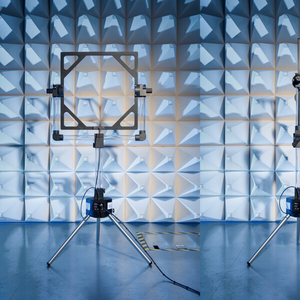
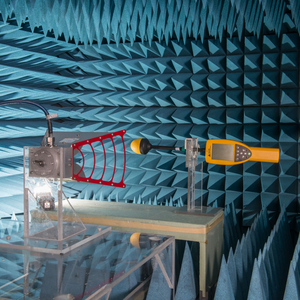
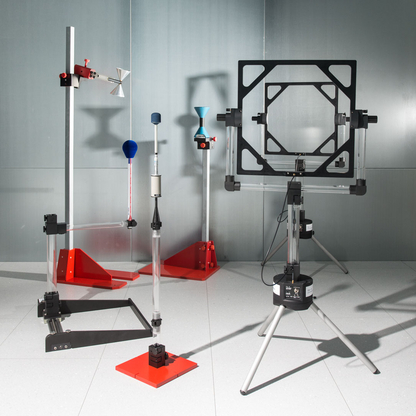
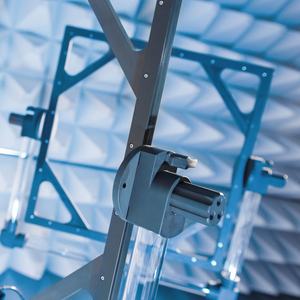
Antenna calibration is carried out in suitable measurement environments selected depending on frequency. Depending on antenna type, frequency range and application, we use Open Area Test Sites (OATS), anechoic chambers, TEM or GTEM cells, or field coils.

All methods are designed to ensure reproducible field conditions and to meet normative requirements. The resulting antenna factors or calibration data are documented together with the associated measurement uncertainty and stated with traceability.

We calibrate following types of antennas:

  • Biconical antennas
  • Log. periodic antennas
  • Hybrid antennas
  • Horn antennas
  • Mil-Std Antennas (Monopole, Loop, Spiral)
  • Dipole antennas 

Technical details

Calibration of field probes

Field probes are used to precisely capture electric or magnetic fields and are applied both in EMC immunity testing and in the field of EMF measurements to assess the exposure of humans to electromagnetic fields. They are therefore a key measuring instrument both in standards-compliant immunity tests and in safety-related exposure assessments.

Field probe calibration is carried out under strictly controlled conditions in defined, homogeneous field environments. Stable field distributions are generated and monitored in order to reliably determine the probe’s sensitivity, linearity and isotropy. The calibration data obtained form the basis for reproducible and standards-compliant field-strength measurements in the laboratory and on site.

We calibrate the following types of field probes:

  • Electric field probes
  • Magnetic field probes
  • Flux density meters
  • Radiation monitors
  • Near field probes

Technical details

Calibration of RF test equipment

Calibration of RF test equipment ensures that power, attenuation and field-strength measurements can be performed reproducibly, traceably and in compliance with standards. We calibrate a wide range of RF test equipment – from frequency-selective and broadband EMF measurement systems and field-strength transfer standards (e.g., RefRad) to LISNs as well as cables, attenuators and couplers through to antennas and field probes.

Calibrations are performed using traceable reference standards and suitable comparison methods. Depending on the instrument and application, quantities such as RF power, RF attenuation, insertion loss, transfer impedance, phase response and frequency accuracy are determined. The aim is to provide a technically robust basis for EMC, EMF and development tests – with clearly stated measurement uncertainty and complete documentation.

We calibrate the following types of RF test equipment:

  • EMF test systems (frequency selective)
  • EMF test systems (broadband)
  • Field strength transfer standards (e.g. RefRad)
  • Line Impedance Stabilisation Network (LISN)
  • Cable, attenuator, coupler
  • Antenna
  • Field Probe

Technical details

Calibration

Supplementary Information

Each calibration is delivered with a complete certificate that includes:

  • Reference to standards (e.g., ISO/IEC 17025, CISPR 16, ANSI C63.x)
  • Uncertainty budget
  • Measurement results and measurement methods
  • Traceability
  • Measurement environment

This documentation is designed for audits, certifications and international comparability.

How to proceed for calibration?

Send an email request to rf-calibration(at)seibersdorf-laboratories.at with the following information on the equipment to be calibrated:

  • Previous calibration certificate number if it was already calibrated in our calibration laboratory– otherwise please specify: Manufacturer, Model name and type, Serial Number
  • Calibration standards which needs to be covered by the calibration or measurement standard for which the equipment is used
  • Include your signature (company name and address, your name, email, phone)
  • Preferred calibration time slot (calendar week)
Validation of anechoic chambers, open area test sites, reverberation chambers, TEM/GTEM cells

Site Validation

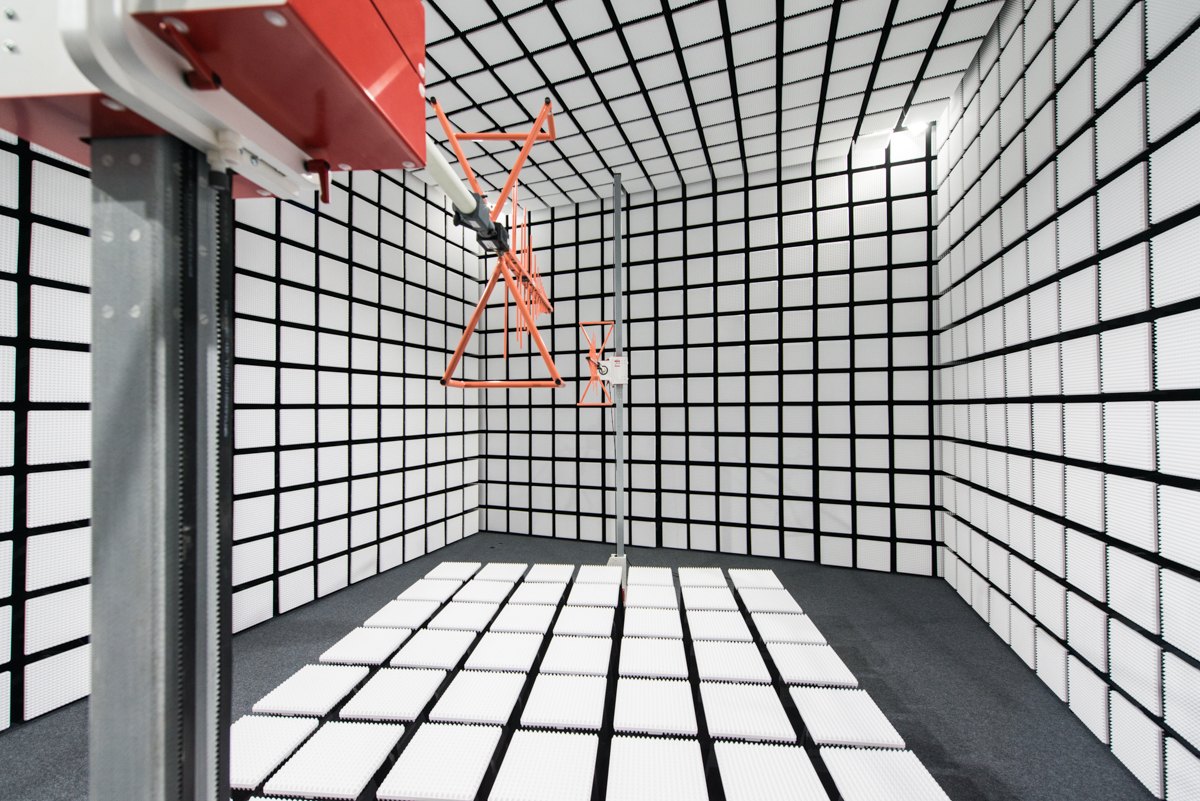
Seibersdorf Laboratories supports operators of radio-frequency measurement facilities in the systematic verification and assessment of the metrological properties of their infrastructure. The aim is to ensure that test sites meet the physical and normative requirements necessary for reliable emission, antenna or comparison measurements.

Our services include the validation of anechoic chambers and open area test sites (OATS) as well as the assessment of antenna test sites. We also support the validation of shielded rooms, where electromagnetic shielding effectiveness plays a key role in the quality of measurement results. Due to the increasing use of reverberation chambers, we have examined this topic in depth and are now accredited for acceptance measurements in accordance with all commonly used standards.

Testing and performance assessment of EMC test sites

Validation of EMC test sites requires precise field-strength measurements and technical know-how to reliably assess performance and compliance with standards. Seibersdorf Labor GmbH is Europe’s leading manufacturer-independent provider of accredited validation of EMC test sites and offers these services as an accredited laboratory. Since 1997, we have also been active in the Asian market as well as in Australia, South America and the USA. Through intensive research in this field, many of our results have been incorporated into international standards, in particular the CISPR 16 series. The resulting expert knowledge feeds directly into our validation services.

Our site validation services cover a broad range of standardized measurements for performance assessment of test sites, including measurements of shielding effectiveness (Shielding Effectiveness), Normalized Site Attenuation (NSA), Site VSWR, field uniformity, ALSE measurements, Normalized Site Insertion Loss (NSIL), ambient noise (AN) and determination of the influence of the EUT table (Table Influence). We are also fully equipped to measure reflectivity of antenna test sites using the free-space VSWR method. In a reverberation chamber, we determine, among other things, parameters such as field uniformity for the empty and “loaded” chamber, loading factor, insertion loss, time constant and quality factor.

In addition, we offer regular re-calibrations of test facilities, which must be considered as measuring instruments and—like other test equipment—must remain traceably calibrated on an ongoing basis, even if the setup has not changed.

Our site validation services are internationally recognized and are used worldwide by test facilities, measurement laboratories and manufacturers to ensure the performance and comparability of test sites.
Shielding Effectiveness

The shielding effectiveness of shielded rooms such as anechoic chambers, TEMPEST rooms or special test environments is measured in accordance with EN 50147-1 and—adapted as required—IEEE 299.

Measurements are typically performed over a wide frequency range from kHz up into the GHz range. The selection of test frequencies can be flexibly adapted to the respective application. Optionally, we also carry out targeted leakage tests, for example at 433 MHz.

Normalized Site Attenuation

Normalized site attenuation (NSA), or the Reference Site Method (RSM) procedure, is used to assess the performance of EMC test sites. Measurements are performed in accordance with CISPR 16-1-4 (RSM) as well as ANSI C63.4 and ANSI C63.25.2—depending on the test site type and the standards to be applied.

Semi-Anechoic Chambers (SAC), Fully Anechoic Rooms (FAR) and Open Area Test Sites (OATS) are validated in the frequency range from 30 MHz to 1 GHz. Tests are carried out with suitable reference antennas in horizontal and vertical polarization. Depending on the measurement environment, volumetric test methods with defined antenna heights and test distances (typically 3 m, 5 m or 10 m) are used.

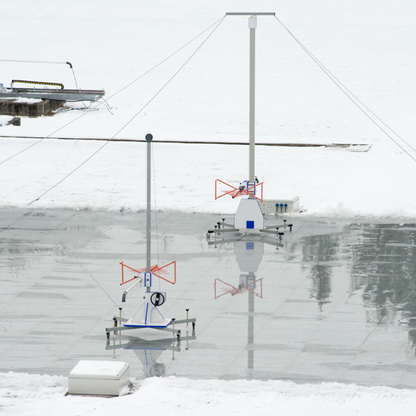
For open area test sites (OATS) without weather protection, matched precision reference dipoles are used to ensure standards-compliant evaluation of site attenuation. The specific selection of frequencies, polarizations, antenna heights and test distances is adapted to the respective standard and the requirements of the test site.

Site VSWR measurement

Measurement of the standing wave ratio of the test site (Site VSWR) is used to assess the reflection properties of EMC test sites in the frequency range above 1 GHz. Tests are performed in accordance with CISPR 16-1-4 using calibrated transmitting antennas, such as our Precision Omnidirectional Dipoles (POD).

Measurements are carried out in the frequency range from 1 GHz to 18 GHz in horizontal and vertical polarization. Depending on the test site type, the volumetric test method with defined test distances—typically 3 m, 5 m or 10 m—is applied.

Field Uniformity Measurement

Field uniformity measurement is used to assess the Uniform Field Area (UFA) in accordance with IEC/EN 61000-4-3. The objective is to reliably characterize the uniformity of the generated electromagnetic field in the defined test area.

Measurements are performed in the frequency range from 26 MHz to 40 GHz with horizontal and vertical polarization. The field distribution is determined at 16 defined points within the test plane. Depending on the frequency range, either a fixed antenna position is used or—at higher frequencies—the so-called windowing method is applied to ensure standards-compliant evaluation of field uniformity.

Absorber-Lined Shielding Enclosure Measurements

Validation of Absorber-Lined Shielded Enclosures (ALSE) in the frequency range from 150 kHz to 1 GHz is performed in accordance with CISPR 25 Ed. 5.0 directly on the customer’s test table. The basis is the procedure described in Annex I with a modeled long-wire antenna. The test field is generated in a standards-compliant manner and captured with suitable receiving antennas—depending on the frequency range. The evaluation is performed using the numerical reference data defined in the standard.

For the frequency range from 1 GHz to 6 GHz, there is currently no standardised normative procedure. In this range, we apply a scientifically published validation method based on simulation-supported reference data. The test field is generated with an omnidirectional dipole antenna (e.g., POD16) 5 cm above the EUT table; measurements are performed with a calibrated horn antenna in horizontal and vertical polarization. The reference values are determined by electromagnetic simulation.

Normalized Site Insertion Loss

Anechoic chambers and Open Area Test Sites must be validated in the frequency range from 9 kHz to 30 MHz if they are to be used for magnetic emission measurements. The corresponding procedures are described in CISPR 16-1-4 and include Normalized Site Insertion Loss (NSIL) as well as, alternatively, the Reference Site Method (RSM).

For validation, loop antennas are used in three orthogonal orientations. Measurements are performed at defined test distances (typically 3 m, 5 m or 10 m) and under reproducible setup conditions. Analogous to the classic NSA assessment, a volumetric test method is applied to reliably characterize the properties of the test site.

For implementation, we use, among other things, our traceably calibrated Precision Loop Antennas (PLA) as transmitting and receiving antennas in combination with a network analyzer. Thanks to the integrated tripod and laser alignment system, setup is efficient and reproducible—without complex automated antenna masts.

Ambient Noise Measurement

Ambient noise measurement is used to capture interference levels at the test site and thus assess suitability for reliable emission measurements. The procedure is standards-oriented in accordance with CISPR 32 or CISPR 25.

Broadband antennas are operated at a defined receive position in horizontal and vertical polarization, and the received field strength is typically recorded over the frequency range from 9 kHz to 18 GHz. The measurement is carried out such that the frequency range is continuously scanned and the relevant maxima are documented.

For a standards-compliant evaluation, the measurement position of the receiving antenna and the applicable limit or acceptance criteria must be defined in advance.

Free Space VSWR Validation

Free-space VSWR validation is performed on the basis of established antenna measurement procedures in accordance with ANSI/IEEE Std. 149. The aim is to assess reflections and unwanted scattering contributions within the anechoic chamber.

To capture reflections, transverse and longitudinal scans are carried out relative to the measurement axis within a defined test volume. Measurements are performed over selected frequencies from VHF up into the GHz range, in horizontal and vertical polarization. In addition, the antenna is varied in defined angular steps in order to systematically capture reflections from different directions within the room.

Reverberation Chamber Validation

Validation of reverberation chambers is performed in a standards-oriented manner in accordance with

  • ISO 11452-11, ISO 11452-5
  • IEC 61000-4-21
  • MIL-STD-461F/G
  • RTCA DO-160G
  • DEF STAN 59-411

Depending on the standard and application, validation can be carried out in the frequency range from 80 MHz to 40 GHz. The mode-tuned or mode stirred procedure can be applied.

In the mode-tuned procedure, the tuner is rotated discretely in steps; in the mode-stirred procedure, it is rotated continuously and uniformly. A CW signal is fed into the chamber via an antenna and measured simultaneously with a field probe and a receiving antenna at defined positions within a cuboid test volume while the tuner position changes.

Depending on the standard, eight or nine measurement positions are recorded. Measurements are first performed in the empty chamber and then repeated with a loaded test volume (e.g., with absorbers). Based on these measurement data, the standard-specific characteristic quantities and validation results are then calculated.

Validation of Table Influence

Assessment of table influence (Table Influence) is performed in accordance with CISPR 16-1-4 in the frequency range from 200 MHz to 18 GHz. The aim is to quantify the influence of the EUT table on field-strength measurements in the context of radiated emission measurements.

For this purpose, a compact transmitting antenna (e.g., a small biconical or omnidirectional antenna) is positioned above the table in horizontal polarization and the received field strength is measured at the nominal test distance. The table is then removed and the measurement is repeated under identical conditions. From the difference between the two measurements, the uncertainty contribution is determined, which must be taken into account in the uncertainty budget for radiated emission measurements.

GTEM-Cell Validation

Validation of GTEM cells is performed in accordance with IEC 61000-4-20 and serves to characterize the field conditions within the defined test plane. The size and position of the validated test plane result from the technical specification of the respective GTEM cell.

For evaluation, the electric field is mapped in a vertical test plane. The injected forward power and the resulting electric field strength are recorded. Based on these measurement data, the norm-relevant characteristic quantities are calculated, including field uniformity (FU), suppression of secondary field components, and the normalized field strength (mean and standard deviation). In addition, the required generator and power values for defined field strengths are determined.

The typical frequency range is between 30 MHz and 3 GHz.

Site Validation

Supplementary Information

Measurands, evaluation procedures and reference to standards

Validation is performed in accordance with international standards and established measurement methods. Site-specific characteristics are assessed, including field uniformity, attenuation and reflection properties, and the stability of measurement conditions (re-validation) over frequency and time.

Depending on the measurement environment, different evaluation quantities are used. In anechoic chambers and antenna test sites, for example, parameters such as field uniformity or reflection characteristics (Normalized Site Attenuation, Site VSWR) are examined. For open area test sites, the focus includes the standards-compliant evaluation of site attenuation. In shielded rooms, shielding effectiveness is additionally considered as a key influencing factor.

The selection and execution of the validation procedures are aligned with the relevant standards and specifications.

Outcome and benefits for the operator

The outcome of the site validation is a structured and technically robust documentation of the test site status. It serves as a basis for internal quality assurance, the preparation and execution of audits, and the long-term operation and further development of the measurement infrastructure. Regular validations allow changes in the measurement environment to be identified at an early stage and addressed in a targeted manner.

In this way, Seibersdorf Laboratories supports operators of RF test sites in sustainably safeguarding the quality of their measurements and reliably meeting the requirements of international standards.

Validation Standards

  • CISPR 16-1-4, CISPR 16-1-6, CISPR 25, CISPR 32
  • ANSI C63.4, ANSI C63.5, ANSI C63.25.2
  • IEC 61000-4-3, IEC 61000-4-20, IEC 61000-4-21
  • MIL-STD-285, MIL-STD-461F/G
  • EN 50147-1
  • IEEE 299, IEEE 149, IEEE 1309
  • ETSI TS and TR (various technical reports and technical specifications)
  • ISO 11452-11, ISO 11451-5

The listed standards sometimes differ significantly in their requirements regarding geometry, levels, height profiles and measurement cycles. Accordingly, each validation must be specifically tailored to the respective standard and implemented with metrological practice.

A site validation does not last forever

Test sites must be regarded as measuring instruments and therefore need to be calibrated regularly, even if no structural changes have been made since the last evaluation. As the market leader in manufacturer-independent validation of EMC test sites, Seibersdorf Laboratories offers regular re-calibration of test sites as a service. The aim of this service is to ensure the traceable calibration of the EMC test facility in accordance with ISO 17025 for accredited test laboratories.

Documentation & Results

Each validation includes:

  • Test report including: description of the procedure, measurement parameters, the measurement equipment used, measurement uncertainty, and results in graphical and tabular form.
  • Measurement results in electronic form
Service for EMC test sites

Accredited Re-Calibration

The EMC test site (Semi Anechoic Chamber, Fully Anechoic Room) of an accredited test house has to be calibrated on a regular basis (like all test instruments). It is a requirement of ISO 17025 to demonstrate the compliance of the test site at regular intervals - even when there was no modification in the construction since the last evaluation.

Seibersdorf Labor GmbH is market leader for the manufacturer independent and accredited validation of EMC test sites. Our team offers a new service for the regular re-calibration of EMC test sites.
 

Advantages

  • Accredited calibration of the EMC test site
  • Confirmation of compliance to performance limits, requested by the standards
  • Report for the presentation to customers and accreditation bodies

Optional services

  • trouble shooting and site improvements
  • set-up optimization
Reference antennas and measurement systems for professional RF measurements

Precise RF Products & Measurement Systems

Our products are based on extensive scientific know-how and many years of development experience. They are used worldwide in test laboratories, research institutions and industrial companies to verify test sites, perform calibrations or set up internal quality assurance systems.

Our Antennas - accuracy at the highest level

The PLA-R and PLA-T (PLA - Precision Loop Antenna) are active, battery powered receive and transmit loop antennas for the frequency range 9 kHz - 30 MHz intended for radiated emission testing (PLA-R) and site validation: Normalized site Attenuation, Shielding Effectiveness (PLA-SET consisting of PLA-R and PLA-T) 

The POD 16 and POD 618 are precision broadband omnidirectional dipole antennas with conically shaped radiation elements covered by an RF-transparent radom. This rugged construction enables excellent dipole-like radiation pattern up to 18 GHz. Fully compliant to CISPR 16-1-4 for site validation above 1 GHz.

The precision conical dipole antennas PCD 3100 (Fully compliant to CISPR 16-1-4 for site validation below 1 GHz) and PCD 8250, provide dipole like directional characteristics up to 3 GHz and very accurate antenna symmetry.

PLA - Precision Loop Antenna

PLA antennas are high-precision antennas for the frequency range from 9 kHz to 30 MHz and are used both for emission measurements and for validation of EMC test sites. As PLA‑R, they are used in EMC laboratories as an active receiving antenna for standards-compliant radiated disturbance measurements and, thanks to a very low noise floor, also enable measurements with low limits. The antennas can be operated actively and—when emissions are strong—also passively to avoid overload. A patented saturation indication provides automatic and unambiguous detection of overload situations in the measurement system.

For validation tasks, they are used as a pair in the PLA set, for example for Normalized Site Insertion Loss (NSIL) and Shielding Effectiveness (SE) measurements in anechoic chambers. Integrated tripods with laser alignment facilitate reproducible positioning, and the battery-powered design enables flexible use without additional amplifiers or external power supply.

Manual


PLA-R Receive Antenna

The PLA-R antenna is an active, battery powered loop antenna for fully compliant radiated disturbance measurements. Due to the broad frequency range from 9 kHz to 30 MHz it is suitable for all emission standards.

A very low noise floor allows for compliance measurements with low limits. Furthermore, the passive operation mode ensures that strong emissions e.g. from wireless charging applications don't overload the preamplifier.

With the integrated tripod, positioning is convenient and fast as the loop antenna needs to be oriented in x, y and z orientation. Two integrated laser pointers support the alignment.

Saturation Indication

The patent circuit avoids erroneous measurements. In case of overload the PLA-R generates a pulsed signal which saturates the EMI receiver. The detection is done “automatically” by the EMI measurement software. No further saturation control mechanism is required. This works with all modern EMI receivers and test software.

Product Highlights

  • Active and passive operation
  • Patented saturation indicator
  • Very low self-noise
  • Meets CISPR 16-1-4 requirements
  • Integrated stand with laser orientation
  • Battery-powered
  • Accredited calibration included
  • Transport/flight case included

Applicable Standards

  • CISPR 14
  • CISPR 11
  • CISPR 36

PLA-SET for Site Validation

The PLA set consists of two active, battery powered loop antennas intended for site validation. With the broad frequency range from 9 kHz to 30 MHz it is suitable for Normalized Site Insertion Loss (NSIL) measurements and Shielding Effectiveness (SE) measurements.

Normalized Site Insertion Loss (NSIL) measurement at 3 m, 5 m and 10 m distance is convenient due to sufficient dynamic range, all required documentation and calibration. Setup and alignment is easy with the integrated tripod and laser system. A decoupling unit to avoid ground loops is included.

Shielding Effectiveness (SE) can be measured with a high dynamic. No external power amplifier or low noise preamplifier is required.

Product Highlights

  • Active transmit and receive antenna
  • Integrated tripod with laser alignment
  • Plenty of transmit power
  • Very low noise floor
  • Battery powered
  • Individually calibrated

Applicable Standards

  • CISPR 16-1-4
  • EN 50147-1
  • IEEE 299

POD - Series

POD (Precision Omnidirectional Dipole) antennas are broadband, omnidirectional precision dipoles for the frequency range from 1 GHz to 18 GHz and are used specifically for validation of EMC test sites above 1 GHz. 

The POD 16 (1–6 GHz) and POD 618 (6–18 GHz) models meet the requirements of CISPR 16-1-4 and are therefore suitable for standards-compliant site validation measurements.

Due to their rugged design with conically shaped radiating elements under an RF-transparent radome, the antennas achieve a very uniform, dipole-like radiation pattern with low anisotropy over the entire frequency range. In addition to test site validation, they are also used for broadband field-strength measurements. Each antenna is supplied with an accredited calibration certificate and can optionally be complemented with a specially matched antenna stand as well as extended radiation-pattern and antenna-factor calibrations.

POD Precision Omnidirectional Dipoles 1-18GHz

The Precision Omnidirectional Dipoles POD 16 and POD 618 are fully compliant to CISPR 16-1-4 for site validation above 1 GHz.

The POD 16 and POD 618 are precision broadband dipole antennas with conically shaped radiation elements covered by an RF-transparent radome. This rugged construction enables excellent dipole-like radiation pattern up to 18 GHz.
 

Applications

  • Site Validation
  • Broadband field strength monitoring

POD 16 Technical Data

  • Frequency Range 1 GHz - 6 GHz
  • Beamwidth (3dB) > 65°
  • H-Plane anisotropy < ± 0.8 dB
  • Max. input power 30 dBm
  • Connector type SMA

POD 618 Technical Data

  • Frequency Range 6 GHz - 18 GHz
  • Beamwidth (3dB) > 60°
  • H-Plane anisotropy < ±0.8 dB
  • Max. input power 30 dBm
  • Connector type SMA

Delivered with accredited calibration certificate, transportation case and manual

Options available

  • Antenna stand designed for site validation measurements according to CISPR 16-1-4 requirements
  • Accredited calibration of radiation pattern and antenna factor (1° resolution, 1 GHz steps)
  • RF-cables and transport cases


Technical details POD antennas (Product sheet)

Technical details POD stand (Product sheet)

Manual


PCD Series

PCD (Precision Conical Dipole) antennas are high-precision conical dipole antennas for broadband field-strength measurements in the frequency range from 30 MHz to 3 GHz. They are used both for standards-compliant test site validations and for demanding applications in RF exposure and safety assessment.

The PCD 3100 and PCD 8250 models feature very high symmetry and reproducible measurement characteristics, making them suitable as reference antennas for precise measurements in the laboratory, in anechoic chambers and in the field. While the PCD 3100 is designed in particular for site validation measurements according to CISPR 16-1-4, the PCD 8250 covers an extended frequency range up to 3 GHz and is preferably used for exposure and field-strength measurements in the vicinity of transmitting installations. Extensive calibration and mounting options enable flexible adaptation to different measurement tasks.

Precision Conical Dipole — PCD 3100 & PCD 8250

Highly Accurate Reference Antennas for

  • Site validation measurements according to CISPR 16-1-4 in fully anechoic rooms
  • Accurate RF radiation safety measurements (e.g. broadcast stations)
  • Exposure evaluation next to mobile communication facilities (e.g. GSM / UMTS base stations)
  • All purposes of broadband precision field-strength measurements
  • Measurements according to our Field Nose method (PCD 8250)

PCD 3100 Technical Data

  • Frequency range: 30 MHz – 1 GHz
  • Power handling: max. 20 dBm input
  • Dimensions: antenna width 21 cm (total)
  • Symmetry: better than ± 0.15 dB
  • Connector type: SMA-female

PCD 8250 Technical Data

  • Frequency range: 80 MHz – 3 GHz
  • Dimensions: antenna width 13 cm
  • Balun symmetry: better than ± 0.15 dB
  • Sensitivity:
     – 0.8 mV/m at 80 MHz
     – 0.1 mV/m at 600 MHz
     – 0.2 mV/m at 900 MHz
     – 0.4 mV/m at 1800 MHz
     – 1.1 mV/m at 2500 MHz
  • Connector type: SMA-female

Options available

  • Individual calibration data
  • Accredited individual free-space calibration with certificate (PCD 8250)
  • Ferrite beaded cable (different lengths, e.g. 5 m or 10 m)
  • Software CalStan for site validation measurements
  • Antenna holder for horizontal and vertical mounting on tripods
  • Special antenna holder for mounting on antenna mast
  • Special antenna holder for Add3D measurements mounting on tripods (PCD 8250)

Delivered with

  • Typical free-space calibration data / individual calibration data (optional)
  • Transportation case
  • Manual

RefRad - reference transmitter for validation and comparative measurements

The RefRad family includes reference generators and radiators for checking and safeguarding EMC and EMF measurement systems for conducted and radiated measurements. They are used to verify measurement setups in a targeted manner before tests (system check), identify faulty instruments at an early stage and thus avoid repeat measurements. At the same time, RefRad systems support the ISO/IEC 17025 requirement for regular verification of test equipment and create confidence in measurement results.

All RefRad devices share the principle of an integrated signal source: a generator is built directly into the antenna element, so no connecting cable between generator and antenna is required. This enables reproducible measurement conditions and a realistic simulation of radiation behavior.

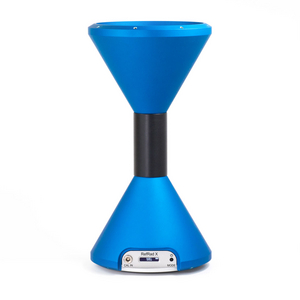
The RefRad X comb generator covers the frequency range from 10 kHz to 3 GHz and can be used for both conducted system checks and—when fitted with an antenna element—for radiated system checks. It is particularly suitable for regular verification of EMC test sites, normalized site attenuation measurements and comparison measurements between laboratories.

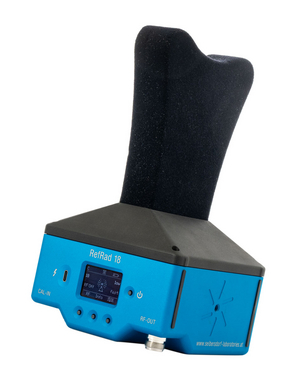
The RefRad 18 extends the application range up to 18 GHz and is based on an innovative concept with an integrated directional antenna. With higher output power, selectable field-strength levels and very stable frequency behavior, it is a flexible tool for fast and precise system checks, calibration and comparison measurements in the high-frequency range.

RefRad X comb generator

RefRad X - reference transmitter for classic RF applications

Comb generator RefRad X with high precision internal oscillator, optimised housing, large battery capacity and OLED display is especially designed for checking the quality of radiated and conducted EMC and EMF tests.

The RefRad X Comb Generator can be used to perform conducted measurements. When the antenna element is attached the device turns into the convenient, easy to use RefRad X Field Source for radiated system checks with no cables required. The highly accurate built-in oscillator (frequency stability ±20 ppb) can be tuned to match customers EMI receiver reference frequency (within ±5 ppb possible) to increase dynamic range and reduce measurement time. 

A comb generator is built inside a conical antenna element. Therefore, no cable between antenna and generator is necessary. This allows for repeatable measurement results and a reliable simulation of radiation performance. Three switchable frequency settings are available: 10 kHz, 1 MHz and 5 MHz.

Thus it is a valuable tool for engineers to ensure the quality of EMC tests in the frequency range between 10 kHz up to 3 GHz.

Field Source Applications

  • normalized site attenuation measurements in fully anechoic rooms (FAR)
  • system checks for test labs (radiated emission)
  • shielding measurements
  • investigation of table and mast influence
  • laboratory inter-comparison measurements
  • test site correlation measurements (same type)
  • correlation of alternative test methods

Comb Generator Applications

  • system checks for test labs (radiated emission)
  • system checks for test labs (conducted emission)
  • cable loss calibrations
  • normalized site attenuation measurements (SAC and FAR)
  • laboratory inter-comparison measurements
  • test site correlation measurements (same type)
  • correlation of alternative test methods
  • chamber factor measurements
  • investigation of table and mast influence

RefRad 18 Reference Radiator

The RefRad18 is an innovative reference radiator with an integrated directional antenna for the frequency range 1 – 18 GHz. Via coaxial output it can be used for conducted measurements. Its OLED display and user-friendly interface ensure easy operation, making it an ideal choice for engineers.

Unique Features

Compared to conventional comb generators, the innovative signal generation design of the RefRad 18 offers several advantages:

  • Higher output power
  • Flat frequency response (coaxial output)
  • Two levels (HI/LO) for field strength measurements and coaxial applications
  • Excellent frequency stability due to temperature compensation
  • Frequency range 1 – 6 GHz or 1 – 18 GHz selectable
  • battery-operated (Li-Ion) and chargeable via USB-C
  • accredited calibration included

The new concept of the RefRad 18 requires a different measurement method compared to a traditional comb generator. The synthesizer generates a signal every 50 MHz (1 - 4 GHz), 100 MHz (4 – 8 GHz) and 200 MHz (8 – 18 GHz). The minimum measurement time per frequency is 500 µs and therefore the whole sweep 1 – 18 GHz can be done in 11.4 seconds. For EMI Receivers, proper setting of bandwidths and measurement time is essential to ensure accurate measurements. Spectrum analysers must be operated at zero span. Compatible with the most common software for measuring electromagnetic interference and CalStan 11 - of course.

Typical Applications

  • system checks for radiated and conducted emission setup
  • cable loss calibrations
  • laboratory intercomparison and proficiency testing
  • shielding measurements
  • correlation of alternative test methods
  • research and development
     

Technical details (Product sheet) 

Manual

CalStan 11 - RF measurement software

CalStan 11 is a software tool for automation of radio frequency (RF) calibrations and measurements. Measurements are performed by controlling devices via GPIB interface, USB or LAN; measured values are read and evaluated. The purpose of the software is to perform calibrations and validations of equipments, such as antennas, cables, test sites and test setups.

Every measurement type is implemented as a plugin to the base application. This way the software can be extended to new functionalities. Similar approach is used by implementation of device drivers, so the support for new measurement equipment can be added on customer request.

Available Measurement Plugins:

  • Site VSWR Measurement 
  • NSIL Measurement in semi anechoic chambers
  • NSA Measurement in semi- and fully anechoic rooms
  • Cableloss
  • Experimental measurement

Technical details (Product sheet)

Manual

CalStan 11 - Installer

Why our products deliver long-term value

Our products are designed for daily use in the laboratory and at the test site. Rugged construction ensures reliability even under demanding conditions, while easy handling supports efficient day-to-day operation. High long-term stability and reproducible measurement results create confidence—today and in the future. The fact that our systems are used worldwide at leading test centers and are also used daily by our own metrology experts underlines their practical value and quality.

ePortal Login

Digital service platform for simple and clear document management in radiation protection.

Login
Academy Login

Course booking platform - book courses online!

Login
Website Login

Protected area for authorized users.

Login