Service & Technology for Safety and Operational Readiness
The defence sector places the highest demands on technology, organization and people. Systems must function reliably under extreme conditions; measurements must be reliable. But above all, it's about people: Protecting the population and emergency services is a top priority.
With services and technology, Seibersdorf Laboratories support all organizations and companies active in this sector — from emergency organizations and armed forces to authorities and safety-critical organizations — in verifiably ensuring the safety, usability and reliability of systems, applications and processes.
Our defence portfolio follows the structural principle of “trust in five dimensions.”
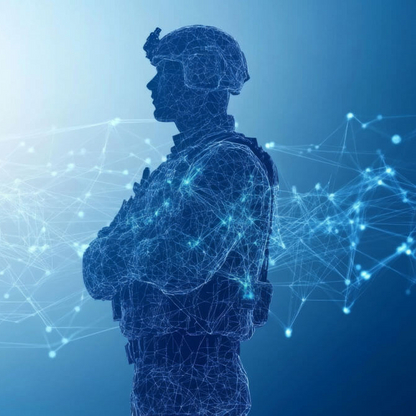
Trust in Five Dimensions — our Performance Model
With our range of services, we create trust through testing, measurement, analysis and training, based on cutting-edge technology and many years of experience.
Our work is divided into five dimensions:

Precise measurements, reliable situation images, reliable measurement technology
Qualified personnel for safety-critical operations
Trust in Functionality
Example: High radiation levels
If it is not possible to use people due to high levels of radiation, technical systems must remain operational in high-radiation environments.
Example: Communication failures in use
Even minor communication disruptions can jeopardize operations and have mission-critical consequences.
Example: Unreliable EMC tests jeopardize projects
When EMC tests are carried out in unvalidated environments, results are often unreliable and result in miscalculations, delays, and lack of international recognition.
Example: Radiation-related threats in space
Military and safety-related satellite missions are endangered by space radiation, particularly during solar storms, which can lead to failures of electronic components and impaired systems.
Example: System reliability in radiation-intensive environments
Critical defence systems can be exposed to ionizing radiation; without appropriate testing, there is a risk of system failure in safety-critical scenarios.
Trust in Operational Safety
Example: Zoning — Protecting Meeting Rooms
In safety-relevant areas such as meeting or situation centers, there is a risk of electromagnetic radiation transmitting confidential information to the outside world. Inadequate shielding leads to information leakage and security gaps.
Trust in the Safety of Emergency Services & the Population
Example: tritium bulb
Tritium-based lamps are used for military purposes; if damaged, gaseous tritium can be released and endanger people and the environment.
Example: Complex requirements for laser simulators and rangefinders
Laser training simulators, LiDAR and powerful distance measurement devices pose a major challenge due to complex pulse patterns and extensive standards.
Example: Determining the laser hazard area
In powerful laser applications, the use of binoculars can increase the hazardous area (NOHD) to several hundred meters.
Example: Invisible EMF exposure endangers personnel
In deployment and training scenarios, soldiers are often exposed to high levels of electromagnetic stress, which poses health and legal risks without risk assessment.
Trust in Measurement and Analysis Technology
Example: fallout and large-scale contamination
Following reactor accidents or nuclear weapons deployments, it is necessary to clear vehicles, people and materials before leaving the area.
Example: sources of radiation under water
In military use, it is necessary to localize sources of radiation even under water.