Robots and drones can reach areas that are inaccessible to humans because they tolerate significantly higher doses of radiation. In order to utilize this advantage in practice, radiation sensors with a larger measurement range are required.
A central requirement is also a uniform, continuous output signal: minimal fluctuations, no interruptions and no signal jumps when switching between measurement ranges or sensors.
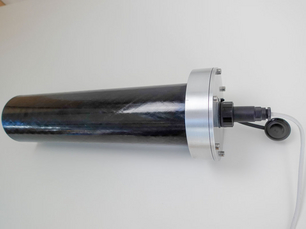
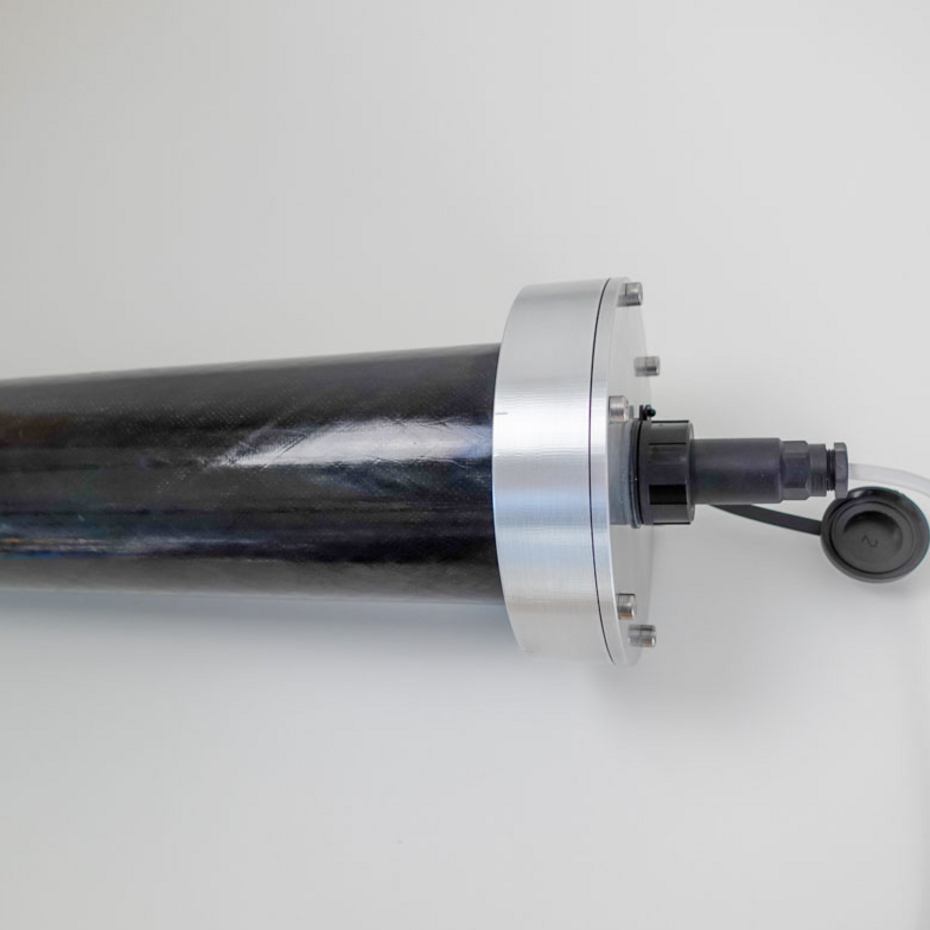
The new RAY-SCAN series meets this requirement by covering the entire measurement range over seven decades with just a single sensor.
The uniform signal simplifies and speeds up mathematical data processing.
In contrast to conventional systems, which evaluate the detector signal using pulse counting, RAY-SCAN probes measure the detector current directly. The electronics are highly sensitive and detect very small currents in the sub-pikoamp range.
At the same time, for the large measurement range, it must also be able to process currents that are many orders of magnitude higher. Although this approach is more electronically sophisticated than the pulse counting method, it offers an extended measurement range and a significantly more uniform signal profile.