Laser, LED & Lamp Safety

Our Services

We provide comprehensive, accredited compliance testing services in our state-of-the-art laboratory, supporting manufacturers from development to final certification. During the product development phase, we offer expert consultingand training to help manufacturers to correctly interpret and apply complex standards and analysis methods, as well as to perform compliance assessments by calculation. 

request now


Laser, LED & Lamp Safety

We offer the following Services

Laser Product Safety 

IEC 60825-1 (EN 60825-1)

learn more

Lamp, LED and Luminaire Safety

IEC 62471 series (EN 62471)

learn more

Ophthalmic Instruments 

ISO 15004-2, ANSI Z80.36

learn more

Solar Simulator Calibration 

for SPF, UVA and UV testing

learn more

Laser, LED & Lamp Safety

Laser Product Safety

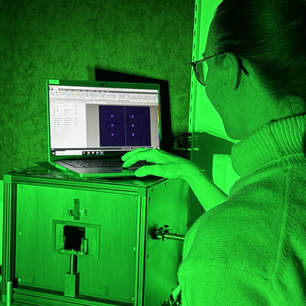
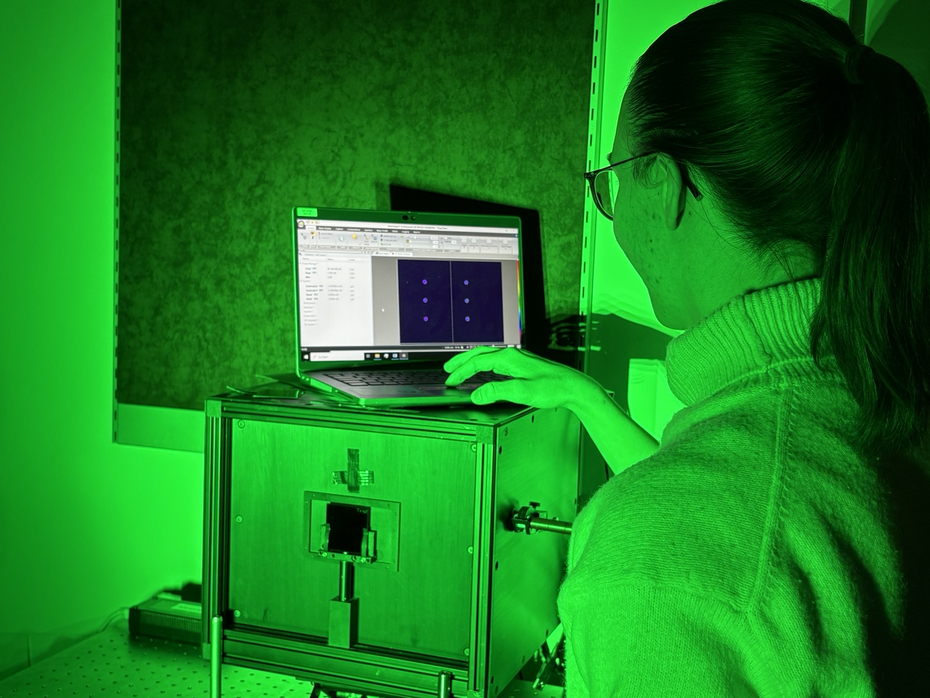
Laser Produktsicherheit (Foto: Seibersdorf Labor GmbH)

IEC 60825-1 Safety of Laser Products

Part 1: Equipment Classification and Requirements

Manufacturers of laser products must ensure that each laser product complies with the requirements of the international standard IEC 60825-1 (or its national adoptions; in Europe: EN 60825-1). Each laser product must be assigned a safety class: Class 1 is considered eye-safe, whereas Class 4 is associated with a high risk of eye and skin injury. To ensure safe products, especially for consumer products, the typical requirement is that the product has to be Class 1, while Class 2 is also acceptable for emissions in the visible wavelength range.

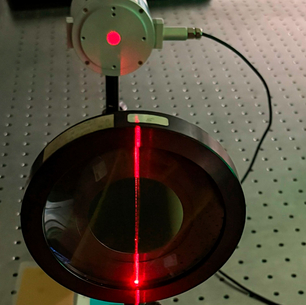
We are specialised in the measurement and analysis of complex sources such as extended sources, pulsed and scanned emissions. Examples of such laser products are image projectors, line lasers, LiDAR, rangefinders, ToF distance sensors, VCSELs, diffused emitters for machine vision, augmented reality and XR glasses (smart glasses) and DOE projectors for 3D cameras.

Our senior consultant Dr. Karl Schulmeister was the project leader for the 3rd edition of IEC 60825-1. Many of the updated exposure limits for extended and pulsed sources are based directly on research results from our team. This internationally unique combination of standardisation expertise, scientific research, and many years of testing experience with optimised measurement methods enables us to provide highly precise measurements and reliable evaluations.

For extended apparent sources, IEC 60825-1 requires variation of both the eye’s accommodation (realised with our artificial eye setup with a CCD camera) and the distance to the product, in order to determine the most restrictive position (White Paper). The captured images are then evaluated by a computer-based image analysis to identify the most restrictive portion of the image and its angular subtense, alpha. The criterion for classification is to identify the maximum ratio of accessible emission (AE) over accessible emission limit (AEL). The Interpretation Sheet ISH1 clarifies several issues related to extended sources and pulsed emissions. It was developed largely based on contributions from our team, with Dr. Karl Schulmeister serving as project leader. ISH1 is freely available for download, for instance from the IEC website.

Besides the requirement that the accessible emission for the nominal operation has to be below the respective class limit, it is also necessary to consider reasonably foreseeable single faults. If it cannot be shown that the emission remains below the class AEL, a risk analysis has to be performed (ILSC Paper). Our test house is uniquely positioned to offer risk analyses based on injury thresholds. The injury thresholds are either taken from publications, or they are calculated with our validated computer models for the retina, cornea and skin. This can be the basis to characterise a fault as not reasonably foreseeable even though the emission exceeds the AEL of the given class.

For laser sources that function as conventional lamps or luminaires, subclause 4.4 of IEC 60825-1 specifies a list of requirements. If the product complies with these requirements, the emission can be classified under the „photobiological safety“ standard for lamps and lamp systems series IEC 62471. The product remains in the scope of IEC 60825-1, but is classified as laser Class 1. Typical products for which this applies are laser image projectors, laser car headlamps and laser stage luminaires. Subclause 4.4 is discussed in more detail in an ILSC paper.

Our test house is recognised as CB Testing Laboratory (CBTL) in the IECEE scheme (CB scheme) so that we can offer certified test reports.
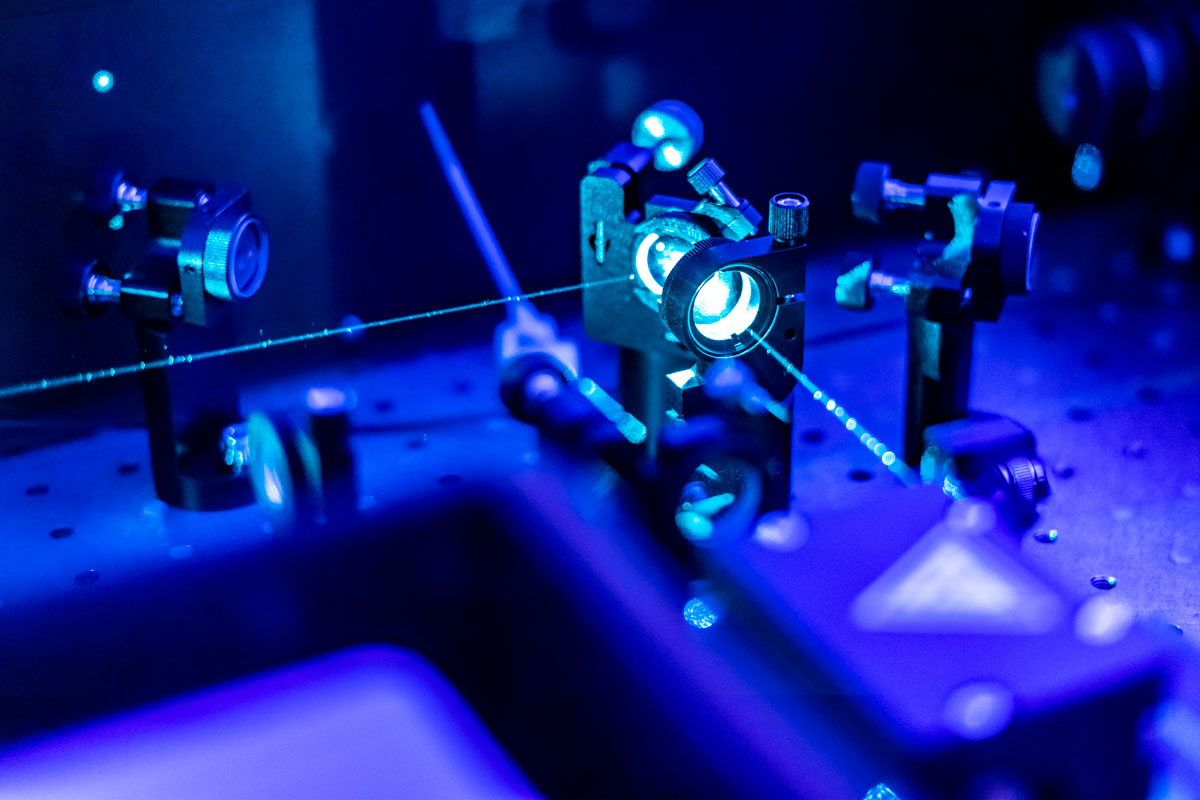
FDA Document for the USA: Laser Notice 56

In the USA, the CDRH, as a department of the FDA, has issued Laser Notice 56, accepting classification and labelling based on IEC 60825-1. The classification system and accessible emission limits (AEL) that can be found in CFR 1040.10 are still valid and may be used, but can be considered as outdated. Therefore we usually test products according to IEC 60825-1, also for the US market.

In special cases, mostly for military applications, classification of laser products can be performed based on the US Standard ANSI Z136.1.

European Amendment A 11:2021

In Europe, EN 60825-1:2014 as published in 2014 is identical to IEC 60825-1:2014. However, an amendment A11 was published in 2021. Thus, the European version EN 60825-1:2014 + A11:2021 has some deviations compared to IEC 60825-1:2014, particularly in the wavelength range of 1250 nm to 1400 nm where there is an additional limit to protect the cornea (for details see our White Paper). Together with the corrigendum AC:2022 issued for amendment A11, some national consolidated versions are published with the publication date of 2022.

European Consumer Safety Standard EN 50689

In 2021, a new standard for consumer laser products, EN 50689 “Safety of laser products – Particular requirements for consumer laser products” was published in Europe. EN 50689 regulates which classes are accepted for consumer lasers to be placed on the European market (see also White Paper on EN 50689). The standard EN 50689 is harmonised under both the Low Voltage Directive and the General Product Safety Directive.

Laser, LED & Lamp Safety

Lamp, LED and Luminaire Safety

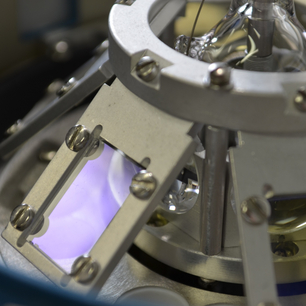
LED und Lampen (Foto: Seibersdorf Labor GmbH)

IEC 62471:2009 Photobiological Safety of Lamps and Lamp Systems

Broadband incoherent optical radiation with sufficient irradiance or radiance can present a hazard to the eyes or the skin. The IEC standard series IEC 62471 defines the framework to assessing such risks. The parent standard IEC 62471:2006 is published in Europe as EN 62471:2008, which is harmonised under the Low Voltage Directive. In EN 62471:2008, the emission limits and measurement requirements for determining the risk groups are the same as in IEC 62471:2006; however, the exposure limits for the eye and skin are included in the EN in an informative annex.

We test LEDs, lamps, lamp systems and luminaires in accordance with IEC 62471 and related standards, and assign them to risk groups. The risk groups provide basic information on the maximum permitted exposure duration, at the given reference distance, before biological exposure limits are exceeded. A sufficiently low risk group classification demonstrates that the product is safe with regards to potential injury to the eye and the skin. However, due to aversion responses, also Risk Group 2 (RG2) classification can in many cases be considered as sufficiently safe. Accurate determination of the risk group requires precise measurement of spectral irradiance or spectral radiance, with consideration of specific averaging angle of acceptances.

The measurement of the biologically effective radiance using imaging methods requires considerable metrological expertise, particularly regarding the correct implementation of defined averaging acceptance angles, such as 11 mrad, and as defined by a field stop. Sources and images that are smaller than the averaging angle of acceptance are associated to an averaged radiance that is much smaller than the physical radiance. We have developed our own dedicated imaging setup and evaluation procedures to provide highly accurate measurements while optimising efficiency for our clients.

For the IEC 62471 series, our test house is recognised as CB Testing Laboratory (CBTL) in the IECEE scheme (CB-scheme).

Systematic errors of commercial photobiology radiance spectroradiometers

Interlaboratory comparisons (round robin tests) have shown that some commercially available “photobiology spectroradiometers,” marketed for IEC 62471 testing (and used by many test houses), exhibit significant limitations when measuring sources smaller than 11 mrad. Due to non-uniform responsivity within the acceptance angle (i.e. within the averaging field of view to determine radiance), measurement errors of up to a factor of three may occur (ILSC paper). Even greater errors can result from applying the “alternative radiance technique” in case the source is not accessible, such as when a lens is part of the product. Our test house has always used radiance measurement setups with discrete components and constant responsivity across the angle of acceptance, achieved with an integrating sphere.

IEC 62471-5:2015 Photobiological safety of lamps and lamp systems

Part 5: Image projectors

For image projectors, IEC 62471-5:2015 specifies emission limits for risk groups and defines measurement requirements. The emission limits for the retinal thermal hazard are based on the ICNIRP update of 2013, where our research projects provided input, particularly for pulsed emission. High power cinema projectors are assigned to Risk Group 3 (RG3) and it is necessary to determine the hazard distance within which the exposure limit is exceeded.

IEC 62368-1 for AV and IT equipment requires compliance with IEC 62471:2006 or IEC 62471-5:2015, respectively.

IEC 62471-7:2023 Photobiological safety of lamps and lamp systems

Part 7: Light sources and luminaires primarily emitting visible radiation

IEC 62471-7:2023 is a more recent standard for the photobiological safety of light sources and luminaires used for lighting or signalling applications. In this context, the broader term electric light source is used, with lamps representing a subgroup. IEC 62471-7 does not define risk groups; compliance is based on blue-light hazard application groups.

For characterising the blue-light hazard, IEC 62471-7:2023 is going to replace the technical report IEC TR 62778 which was withdrawn, but is still referenced as an optional assessment in the luminaire safety standard IEC 60598-1:2024. 

Accredited calibration laboratory

We also operate an accredited calibration laboratory for the calibration of spectroradiometers. This service is particularly relevant for the calibration of photodiode arrays, for which the manufacturer cannot provide accredited calibration.

Information on our calibration service for solar simulators.

Laser, LED & Lamp Safety

Ophthalmic Instruments

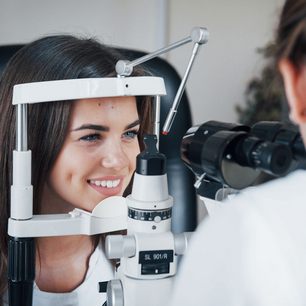
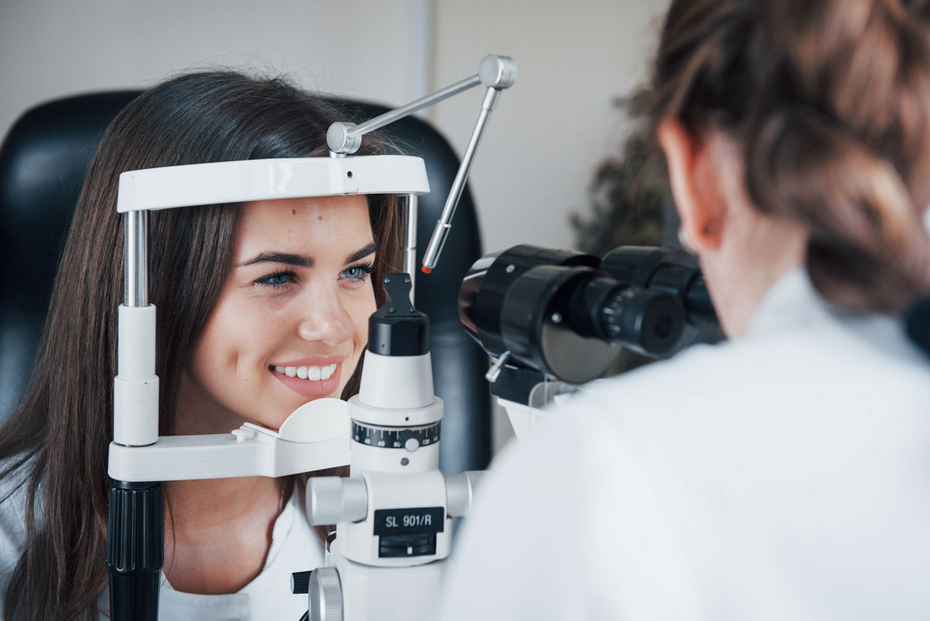
Ophthalmische Instrumente (Foto: AdobeStock)

ISO 15004-2: Ophthalmic instruments – Fundamental requirements and test methods

Part 2: Light hazard protection

Safety limits and measurement requirements for ophthalmic instruments that direct light into the eye differ from other light sources. The patient might have dilated pupils and lack of eye movements. ISO 15004-2:2024, and the version for the U.S. market, ANSI Z80.36, define limits for Group 1 instruments which are considered safe when used as intended. For Group 2 instruments the limits are higher and information about maximum permitted exposure durations needs to be supplied. With our expertise in damage thresholds, we can support manufacturers in preparing the risk management file that is required for Group 2 instruments. In these latest editions of the ISO and the ANSI standard, the requirements apply to both broadband incoherent optical radiation as well as laser radiation. Therefore, a classification as Laser Class 1 according to IEC 60825-1 is no longer sufficient.

Examples of ophthalmic instruments within the scope of these standards include slit lamps, direct and indirect ophthalmoscopes, fundus cameras, OCT and SLO. There are product-specific standards for endoilluminators (ISO 15752), slit lamps (ISO 10939), direct ophthalmoscopes (ISO 10942), indirect ophthalmoscopes (ISO 10943) and OCT (ISO 16971-1). These standards require compliance with ISO 15004-2 with regard to protection against light hazards and may require additional tests, for which we are also accredited.

ISO 10936-2: Operation microscopes

Besides ophthalmic instruments, we also test operation microscopes based on the standards ISO 10936-2 and ANSI Z80.38.

IEC 60601: Medical electrical equipment

We also have the following standards for medical electrical equipment in our accreditation scope, where we are accredited for those paragraphs and subclauses that relate to light hazards:

  • IEC 60601-2-41 Medical electrical equipment - Part 2-41: Particular requirements for the basic safety and essential performance of surgical luminaires and luminaires for diagnosis
  • IEC 60601-2-57 Medical electrical equipment - Part 2-57: Particular requirements for the basic safety and essential performance of non-laser light source equipment intended for therapeutic, diagnostic, monitoring, cosmetic and aesthetic use
  • IEC 60601-2-83 Medical electrical equipment - Part 2-83: Particular requirements for the basic safety and essential performance of home light therapy equipment
Laser, LED & Lamp Safety

Solar simulator calibration for SPF, UVA and UV testing

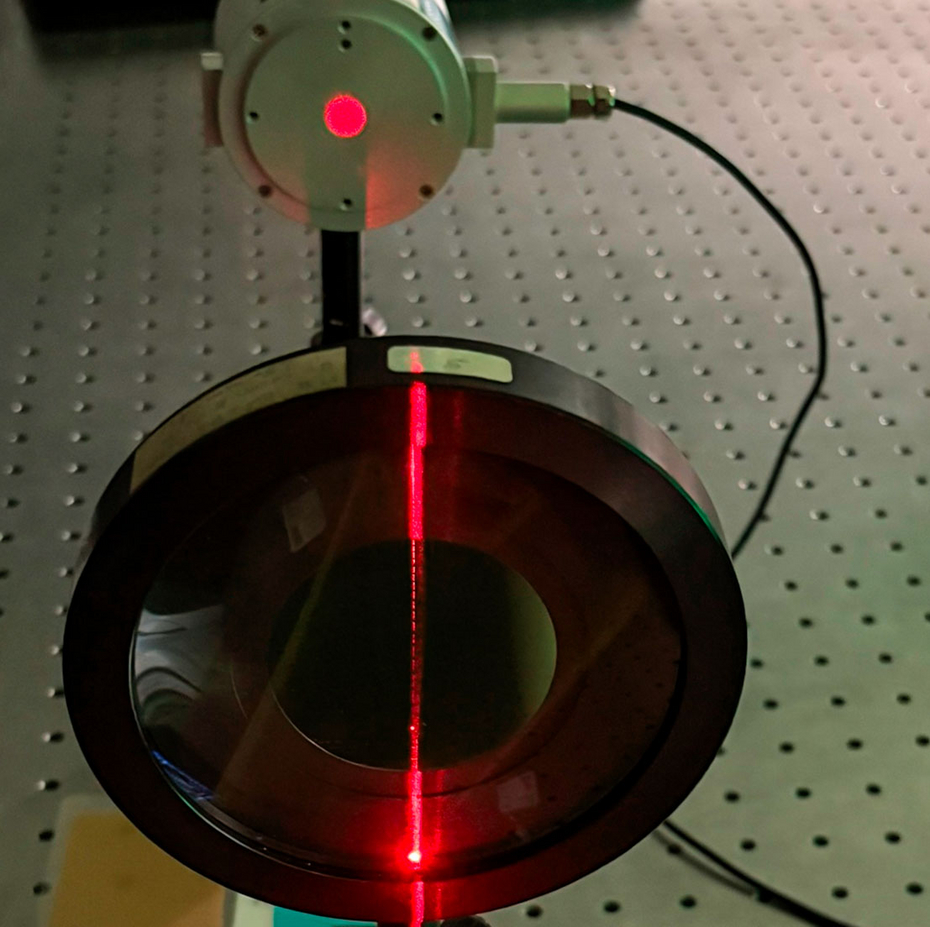
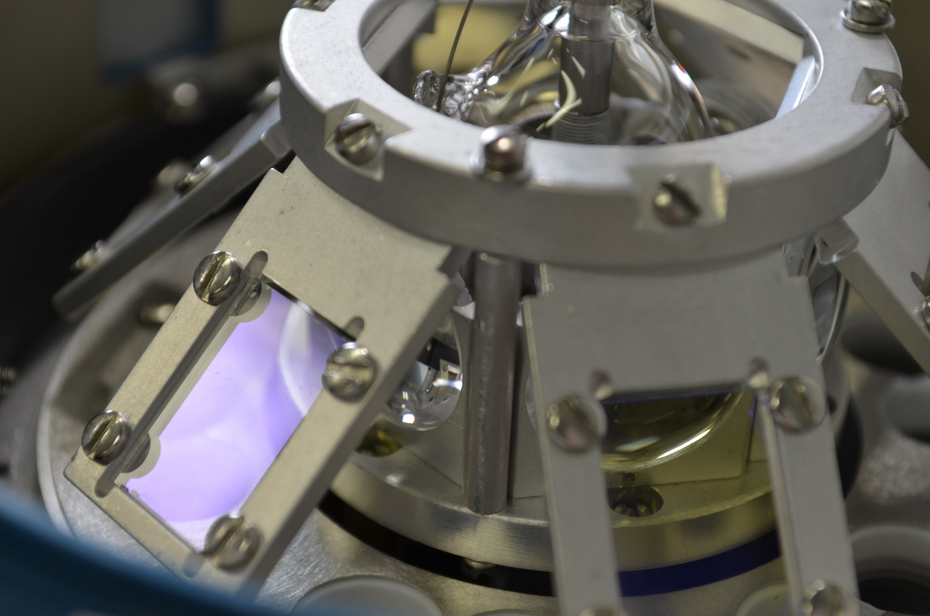
Solarsimulator (Foto: Seibersdorf Labor GmbH)

Solar simulator calibration for SPF, UVA and UV testing

Solar simulators are designed to replicate natural sunlight and are essential tools in cosmetics, pharmaceutical, material testing and research applications. The spectral distribution and irradiance of ultraviolet radiation directly influence the validity, reproducibility and comparability of test results – especially for SPF and UVA protection testing. Cosmetics Europe and international standards therefore require regular verification and calibration by independent, accredited laboratories using high-precision spectroradiometric methods.

We offer accredited calibration services for solar simulators used in SPF, UVA and UV testing for the following standards:

  • ISO 24442 In vivo determination of UVA protection
  • ISO 24443 In vitro determination of UVA photoprotection
  • ISO 24444 In vivo determination of SPF
  • SPF Test Procedures (FDA 2011, FDA OTC M020)
  • Daylight UVR Test Procedure (L’Oréal, 2006)
  • ISO 23675 In vitro determination of sun protection factor (SPF)
  • ISO 23698 Measurement of the sunscreen efficacy by diffuse reflectance spectroscopy


Additionally to the calibration of solar simulators we determine calibration factors for customer radiometers.

Go to the solar simulators product sheet

Contact

Laser, LED & Lamp Safety
T: +43 50550-2882 F: +43 50550-3033
E: laser-led-lampen-sicherheit(at)s-l.at


ePortal Login

Digital service platform for simple and clear document management in radiation protection.

Login
Academy Login

Course booking platform - book courses online!

Login
Website Login

Protected area for authorized users.

Login